
Growth sprints, the Flamel way: one cycle per experiment
How a growth sprint works with Flamel: one experiment per cycle, a decision rule written first, a number read from your admin, a record you keep.

A growth sprint, the way Flamel runs it, is one cycle built around one experiment. A hypothesis and a decision rule are written before anything changes, one variable runs on the brand's own calendar, and the cycle ends with a number read from the brand's admin and a paragraph the brand keeps. A drop, a season or a new product page can host the experiment. None of them is the frame.
The cycle is the unit of work and the unit of reporting. What follows is what that looks like from the brand's side: who does what, what the team sees as the weeks go by, what Flamel does not do, and how one cycle chooses the next.
A growth sprint is one cycle built around one experiment: a hypothesis and a decision rule written before anything changes, one variable run on the brand's own calendar, and a number read from the brand's admin at the end. Flamel runs one cycle per experiment, so each sprint leaves a written answer the brand keeps.
Key takeaways
- A growth sprint is one cycle around one experiment, with its decision rule written before anything changes.
- The method has four phases, Discover, Connect, Impact and Scale; sprints run in Connect and Impact.
- The brand names one owner and gives read access; Flamel builds what the experiment needs.
- On the worked store, split tests give about 3.5 answers a year; four-week sprints give 8.
- The record stays with the brand, whether or not it hires Flamel for the next cycle.
What Flamel is, seen from one cycle
Flamel is the growth partner of the creative industries. It works with founders, CMOs and heads of product at companies that want to scale digitally, and it works inside their marketing and product teams rather than next to them. What Flamel is covers the definition. This piece covers the rhythm: the work arrives in cycles, and each cycle answers one question about the brand's own customers.
The question always sits in one of the 5 moments this blog uses for a creative brand: Appear, Attend, Recognize, Retain or Know. The growth marketing definition explains each one. The brands this rhythm fits already sell, launch often and want to scale, and their team ships campaigns and launches while nobody owns the loop of testing a change and reading what it did.
The method: four phases, two letters each
Flamel's method is called A.C.T.I.V.A.T.E.: 4 phases, two letters each, in order.
- Discover: Audience and Clarity. Who the customer is, what they fear and what they want, and whether the value proposition is clear in 3 seconds. The Digital Experience Blueprint covers this phase: five business days, $500.
- Connect: Touchpoints and Insights. Redesign the points of contact the experiment needs, and design the experiment itself, including how its feedback will be collected.
- Impact: Validation and Activation. Run the experiments with real customers, and keep a dashboard that shows the progress.
- Scale: Team and Evidence. Flamel inside the marketing and product teams, and the knowledge that stays with the team when each cycle ends.
Growth sprints live in Connect and Impact. Discover happens once, at the start. Scale is what a run of sprints adds up to.

Inside a growth sprint: who does what, week by week
Here is a 4-week cycle, as an example. The real length is set by how long the measure needs to read, not by a fixed calendar.
- Before week 1. The brand names one owner for the cycle and gives read access to its store admin, analytics and email tool. Flamel reads the record of the previous cycle, or the Blueprint if this is the first one.
- Week 1: the bet. One hypothesis, the moment it targets, the one variable that changes, the baseline, and the decision rule: which result keeps the change and which result reverts it. The owner approves it in writing before anything goes live.
- Weeks 2 and 3: the run. Flamel designs and builds what the experiment needs: the page, the offer, the email, the measurement, and paid traffic when the question calls for it, bought as a test instrument with a budget and a date. The brand's team does what only it can do: the product, the stock, the photos, the shipping, the community.
- Week 4: the read. The number comes from the brand's own admin, set against the baseline. One paragraph goes into the record: what was expected, what happened, what changes. The next cycle is chosen from it.
Throughout the run, the owner follows the cycle on its dashboard, which is the Activation letter of the method, and is asked for a decision only when the experiment needs one. Marketing experiments shows the same shape from the inside, for a brand that launches in drops.
Choosing which moment deserves the first growth sprint, priced on a store's own numbers, is what The Conversion Audit does in five business days.
What Flamel does not do in a sprint
- Promise a number before reading the admin. Flamel promises the map and the cycles that test it, never a result decided in advance.
- Change two things at once. One variable per cycle, or the read cannot say which change did the work.
- Do the fieldwork. Anything on site, from a pop-up to a photo shoot, stays with the brand's team.
- Run campaigns that never end. Paid traffic answers 1 question, then stops.
- Keep the record for itself. It lives in the brand's own tools and stays there whether or not the brand hires Flamel for the next cycle.
A growth sprint per experiment, not per split test
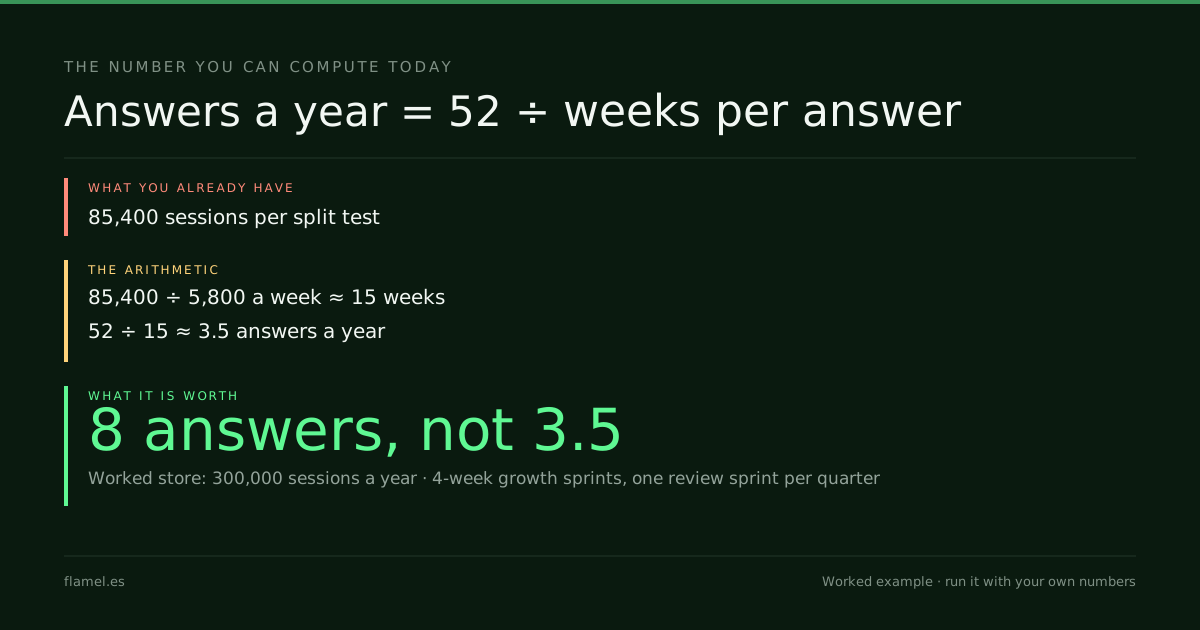
A split test is the strongest read there is, and most creative brands cannot wait for it. On the worked store this blog uses, with 300,000 sessions a year (about 5,800 a week), reading a lift from 1.0 to 1.2 orders per 100 sessions with a standard split test needs about 42,700 sessions per variant, 85,400 in total. A sample size calculator such as Evan Miller's reproduces the order of magnitude. That is about 15 weeks of the store's sessions for one answer.
The word sprint comes from product design. GV describes its design sprint as “a five-day process for answering critical business questions through design, prototyping, and testing ideas with customers” (GV). A growth sprint keeps that discipline, one question and real customers, and runs long enough for the answer to show up in the store's numbers instead of in five interviews.
What a growth sprint produces is closer to what Eric Ries calls the real output of a young business: “The unit of progress for Lean Startups is validated learning” (The Lean Startup). Here the unit of progress is the paragraph in the record. A sprint's read is a dated decision against a baseline, not a significance test, and the record says how strong each read was.
Answers per year: the number to take
Answers per year = 52 ÷ weeks per answer.
On the worked store, a split test needs about 85,400 sessions, which is 85,400 ÷ 5,800 ≈ 15 weeks, so 52 ÷ 15 ≈ 3.5 answers a year. Growth sprints of 4 weeks, with one review sprint each quarter to read the records together, give 8 experiments and 4 reviews in the same year: 8 written answers about the brand's own customers, more than twice the split-test pace.
To run it on your own store, divide the sessions your next split test would need by your weekly sessions, then divide 52 by the result. If the answer is below 4 a year, the next question belongs in a growth sprint, and the growth strategy decides which bet gets it.
Work through this with your own numbers
I run a creative brand that sells through [drops / a catalog / a membership / seasons] and gets about [weekly sessions] sessions a week at a [conversion rate] conversion rate. The change I want to test is [the change], aimed at the [Appear / Attend / Recognize / Retain / Know] moment. Work out how many sessions a standard split test would need to read a lift from [current rate] to [target rate], how many weeks that takes at my traffic, and how many answers a year that gives. Then design a four-week growth sprint for the same question: the hypothesis, the one variable, the baseline, the measure and the decision rule I should sign before it goes live. Tell me how strong a read I can expect and what the record should say at the end.FAQ
What is a growth sprint?
A growth sprint is a short cycle built around one experiment: a hypothesis, one variable, a baseline, a decision rule written in advance, and a number read at the end. Its output is a written answer about the brand's own customers, which decides the next sprint.
How long is a growth sprint with Flamel?
As long as its measure needs to read. Four weeks is a common shape for a product-page change read against the four weeks before; a measure such as repeat purchase needs longer, because the customers in the cohort need time to come back.
What does a brand need to provide for a growth sprint?
One owner who approves the bet and the decision rule, read access to the store admin, analytics and email tool, and the work only the brand can do: the product, the stock, the photos, the shipping and anything on site.
What is Flamel's method?
It is called A.C.T.I.V.A.T.E.: four phases with two letters each. Discover: Audience and Clarity. Connect: Touchpoints and Insights. Impact: Validation and Activation. Scale: Team and Evidence. Growth sprints run in Connect and Impact.
Does Flamel guarantee the result of a growth sprint?
No. Flamel promises the map and the cycles that test it, not a number decided before reading the admin. What every sprint does guarantee is a written answer, which stays with the brand whether or not it continues.
Finding the moment that deserves the first growth sprint, and pricing it on a store's own numbers, is what The Conversion Audit maps. Five business days, $500, and the map stays with you whether or not you hire anyone next.
Your store, five days.
$500. Zero commitment. Yours either way.