Ecommerce customer experience: the second order
Ecommerce customer experience becomes growth at the second order. The five stages after checkout, who owns them, and what a change can cost per parcel.

Ecommerce customer experience is everything a customer lives through with a store, and most of it happens after the order: the confirmation, the wait, the delivery, the unboxing, the first use and the first question to support. That stretch is where a first-time buyer decides whether there will be a second order.
In most creative brands, nobody owns it. Marketing's reports end at the order. Operations counts parcels shipped on time. Customer service answers whatever comes in. Each team does its part well, and none of them is measured on the one number the stretch produces: how many first-time buyers come back. Customer experience becomes growth at exactly that point, and only when someone changes a part of it on a known date and reads what happened to the second order.
Ecommerce customer experience is every interaction a customer has with a store, and most of it happens after the order: delivery, unboxing, first use, support and community. It becomes growth at the second order. Each point of repeat purchase it moves is worth the average order times the gross margin, per first-time buyer.
Key takeaways
- Most of ecommerce customer experience happens after the order, in the stretch that decides whether a first-time buyer orders again.
- The post-purchase experience has five stages (confirmation, the wait, unboxing, first use and community), and each usually has an owner measured on something else.
- How a creative brand earns its revenue (drops, catalog, membership or seasons) decides which stage carries the second order.
- Customer experience becomes growth with one owner, one number (second orders per 100 first-time buyers) and changes made on a known date.
- On the worked store, moving repeat purchase from 40 to 44 of every 100 is worth €2,295 of margin a year: €1.22 per first order.
What ecommerce customer experience covers after the order
Salesforce describes customer experience management as "caring about the end-to-end experience your brand has with its prospects, customers and brand evangelists." End to end is the important part. A store's design budget usually goes to the half that comes before the money: the home page, the product page, the checkout.
Klaviyo names the other half: "The post-purchase customer experience is made up of every interaction someone has with your brand after they buy. It includes transactional messages, follow-up promotions, customer support, and re-engagement flows." In a creative brand it also includes the parcel itself, the first time the product is worn or used, and the community of people who bought the same thing.
The same Klaviyo article shows where the attention goes. In its 2025 State of B2C Marketing report, 73 of every 100 B2C marketers said customer acquisition is getting more expensive, and only 14 of every 100 said they were prioritizing retention. Its 2025 Future of Consumer Marketing report found that 1 in 5 consumers stop buying from a brand after a single negative experience. The budget follows the first order; the second order is decided where the budget does not reach.
The post-purchase experience, stage by stage
The stretch between the first order and the second has five stages. Each one asks the customer a question, and each has a usual owner who is measured on something else:
| Stage | What the customer is checking | Usually owned by | What to count |
|---|---|---|---|
| Confirmation | Did it go through, and when will it arrive? | The platform's default email | Order-status questions to support |
| The wait | Is it on its way? | The carrier | "Where is my order" messages per 100 orders |
| Unboxing | Does it look like the photos? | Whoever packs | Returns marked "not as expected" |
| First use | Did it do what it promised? | Nobody | Questions in the first two weeks |
| Community | Am I part of something? | Social media | Second orders from buyers who engaged |
None of the "what to count" column needs a new tool. Every store already has its support inbox, its returns and its order export. What is missing is the column nobody fills in: which stage loses the most first-time buyers. The repeat purchase rate post covers three of these leaks from the store's side (the gap after checkout, the first use and the timing of the next prompt). Read from the customer's side, the question is the same: at which stage does the brand stop showing up?

Where the second order hides, by revenue mechanism
How a creative brand earns its revenue decides which stage carries the second order:
| Mechanism | The second order is... | The stage that decides it |
|---|---|---|
| Drops | Buying the next drop | Community: being on the list, and in the conversation, before the next launch |
| Catalog | A refill or a second piece | First use, then a reminder timed to when the product runs out |
| Membership | The second payment | Unboxing and first use of the first month |
| Seasons | Coming back next season | Everything between seasons: months without a reason to hear from the brand |
A drop brand that pours its effort into packaging and forgets the list has spent on the wrong stage. A membership that sends a beautiful first box and then disappears until the next charge has done the same. The growth and innovation post puts a price on this for a single launch: the collection earns its first orders, and the work around it earns the second ones.
What the experience can cost per first order
Every one of those changes costs something per parcel: a printed card, a sample, faster shipping, an hour of someone's time answering first-use questions. The useful question is not whether customers will like it. It is how much it can cost per first order and still pay for itself.
Budget per first order = points of repeat purchase moved × average order × gross marginTake the store used across this blog: 300,000 sessions a year, a €68 average order, a 1.0 % conversion rate and a gross margin of 45 cents on the euro. That is 3,000 orders from 1,875 customers at 1.6 orders each. 750 of them come back, 40 of every 100, so 60 of every 100 stop at the first order.
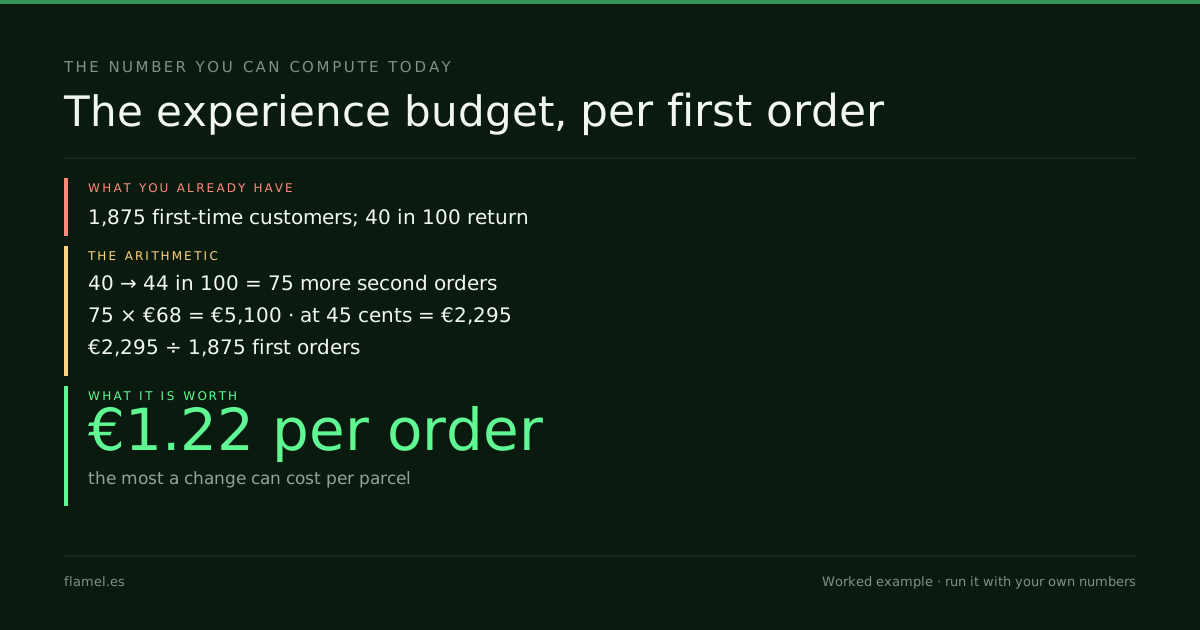
Say a change to the post-purchase experience, made on a known date, moves the share that comes back from 40 to 44 of every 100. That is 75 more customers placing a second order:
- 75 × €68 = €5,100 of revenue a year
- At 45 cents of margin on the euro, €2,295 of margin
Spread that margin over the 1,875 first orders and it comes to €1.22 per first order. That is the most the change can cost per parcel and still pay for itself in the first year. The same arithmetic works backwards for any idea on the table:
- A €0.40 printed card has to move about 1.3 points, roughly 25 more returning customers a year.
- A €2.00 gift in every parcel has to move about 6.5 points, from 40 to 46.5 of every 100.
It is the conservative reading. It credits each newly returning customer with one extra order, while on this store the customers who come back average 2.5 orders, which is why their customer lifetime value is worth calculating honestly. A real move would land above €1.22, not below it.
Finding the stage of the post-purchase experience where your first-time buyers stop, on your own orders, is part of what The Conversion Audit maps.
Who owns ecommerce customer experience after checkout
The €1.22 only exists if someone can read it. Customer experience turns into growth once three things are in place: an owner for the whole stretch, one number to read, and changes made on a known date.
The number is second orders per 100 first-time buyers, inside a window that fits the product. It counts people, not orders. On the store above, 40 of every 100 customers order again within the year, while repeat orders are 37.5 of every 100 orders, the figure worked out in how to measure product market fit. Both are right; they answer different questions. This one asks how many first-time buyers the experience brought back.
Then one change per cycle, to one stage, on a known date: a different confirmation email, a note in the parcel, a message on day ten that asks how the first use went, a place for buyers of the last drop to see the next one first. Each change is read after a window as long as the product's natural repurchase cycle, with the decision rule written before it starts. It is the Retain moment of growth marketing for creative businesses, worked one stage at a time.
The number to take to your own store
Three inputs, all of them already in the store's admin:
- Count the customers who placed a first order in the last twelve months, and how many of them placed a second.
- Write down your average order and your gross margin.
- For each change on the table, divide its cost per parcel by average order times margin. The result is the number of repeat-purchase points it has to move to pay for itself.
What to do this week: pick the one stage in the table above that nobody owns in your brand. Read the last 50 messages, returns or comments that came from it, and write down the change that would answer the most common one. Price it with the formula before anyone designs it, and put a date on the read.
Work through this with your own numbers
I run a creative brand that sells through [drops / a catalog / a membership / seasons]. In the last twelve months, [number] customers placed a first order and [number] of them placed a second. My average order is [average order value] and my gross margin is [margin, as cents per euro or dollar]. Here are the changes to my post-purchase experience I am considering, with their cost per parcel: [list them]. For each one, calculate how many points of repeat purchase it has to move to pay for itself in a year (cost per parcel divided by average order times margin), say which stage it touches (confirmation, the wait, unboxing, first use or community), and tell me which stage my revenue mechanism depends on most, so I know which change to date and read first.FAQ
What is ecommerce customer experience?
It is every interaction a customer has with an online store, from the first visit to the support conversation months later. Most of it happens after the order: the confirmation, the wait, the delivery, the unboxing, the first use and the community around the brand. That part decides whether a first-time buyer orders again.
What is the post-purchase experience?
It is everything a customer goes through after they pay: transactional emails, delivery, unboxing, first use, support and the messages that invite them back. It is the least designed part of most stores and the one that decides the second order.
How does customer experience drive growth in ecommerce?
Through the second order. A better experience after checkout only becomes growth when it brings more first-time buyers back. Measure second orders per 100 first-time buyers, change one stage at a time on a known date, and read the result after a window that fits the product's repurchase cycle.
How much should a store spend on the unboxing experience?
No more than the second orders it brings back. Divide the cost per parcel by the average order times the gross margin: that is the number of repeat-purchase points the change has to move. With a €68 average order and 45 cents of margin on the euro, a €0.40 card needs about 1.3 points and a €2.00 gift about 6.5.
Finding the stage where your first-time buyers stop coming back, and pricing the change that would bring them back, is part of what The Conversion Audit maps. Five business days, $500, and the map stays with you whether or not you hire anyone next.
Your store, five days.
$500. Zero commitment. Yours either way.